Accelerated Summer Treatment Program for ADHD and Autism, with remote treatment options for CA patients. To learn more,
click here >>Accelerated Summer Treatment Program for ADHD and Autism, with remote treatment options for CA patients. To learn more,
click here >>If you or a family member need help, please fill out our confidential online form
Neurophysical and Behavioral Medicine specializing in the non-drug treatment of ADHD, Autism, and Stress illnesses/disorders in West Los Angeles and Irvine, CA
"They started biofeedback right away to produce more alpha brain waves. I went daily for 4 weeks I believe? It was relaxing. My brain learned what to do. It CURED me."

SONYA YELP
"The treatment involves doing different protocols, you start to notice a difference after a couple weeks. The Drake Institute, and their treatment method is the way of the future! It absolutely was an answer to our prayers."
NINA P YELP
"I was hesitant to go to The Drake Institute but was at a loss on how to help my son. I can not thank Drake and Maria enough I don't think we would be where we are today without it."
KATY M YELP
Our accelerated summer treatment program is designed to generate the same long-term positive results as our traditional, longer program, but at a significantly faster pace. This program requires just 6 weeks for ADHD treatment, and just 8 weeks for Autism Spectrum Disorders treatment.
Learn MoreAs a result of recent advancements in technology, we can now administer at-home treatments for our patients throughout California. With this advancement, we are now treating patients anywhere in the state.
Remote Treatment OptionsThe Drake Institute of Neurophysical Medicine is a world renowned ADHD, Autism, and Stress illnesses treatment center with over 40 years of clinical experience providing non-drug treatments for the following neurophysical disorders:
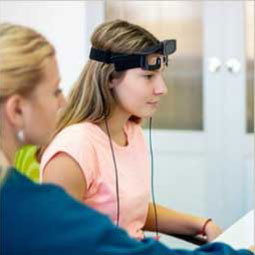
For 40 years the Drake Institute has made biofeedback and brain map guided neurofeedback the centerpiece of its treatment programs. It gives us a safe and non-invasive method to access brain functions to facilitate neurophysical improvement, thereby reducing or eliminating symptoms. This is the cornerstone of our treatment programs, not simply an add on to other therapies or medications. Our goal is to reduce symptoms and ultimately decrease or eliminate medications when appropriate. Because it has been the central treatment for our patients for 40 years, it has enabled the Drake Institute to develop leading edge knowledge and clinical experience in its applications for ADHD, Autism Spectrum Disorders, and stress related disorders or diseases. All of these disorders have one thing in common: at their core is irregular brain function.
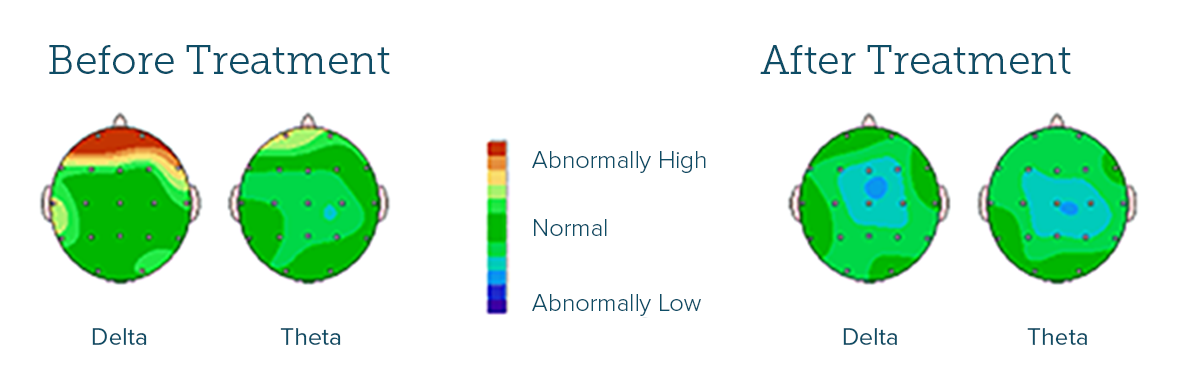
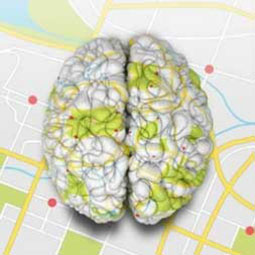
Non-invasive QEEG Brain Mapping is analogous to a physician performing a throat culture on a patient with a throat infection to determine which antibiotic would best eradicate the infection. Brain Mapping gives answers to what’s going on below the surface. The Brain Map analysis gives us important information to more effectively help improve the quality of life and productivity of each individual patient. QEEG (Quantitative Electro- encephalogram) or Brain Mapping is an essential diagnostic procedure for developing non-drug treatment protocols for ADD / ADHD, Autism, Learning Disorders, Anxiety, Substance Abuse, Depression and Stress Related Illnesses.
Brain Mapping data guides our development of neurofeedback treatment protocols which will enable the patient to strengthen and improve brain functioning, reducing their unwanted symptoms. We have used this technology for over 35 years because we know clinically it produces the best long term results for many disorders. Neurofeedback is safe and can lead to long term improvement, unlike the drugs, because neurofeedback uses a learning process that strengthens and develops the synaptic connections in the brain.

Dr. David Velkoff of The Drake Institute on the Dr. Laura Show Copyright 2011, Take On The Day, LLC. Audio interview used by permission.
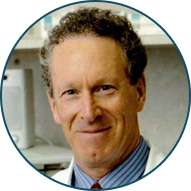
“David F. Velkoff, M.D., our Medical Director and co-founder, supervises all evaluation procedures and treatment programs. He is recognized as a physician pioneer in using biofeedback, qEEG brain mapping, neurofeedback, and neuromodulation in the treatment of ADHD, Autism Spectrum Disorders, and stress related illnesses including anxiety, depression, insomnia, and high blood pressure. Dr. David Velkoff earned his Master’s degree in Psychology from the California State University at Los Angeles in 1975, and his Doctor of Medicine degree from Emory University School of Medicine in Atlanta in 1976. This was followed by Dr. Velkoff completing his internship in Obstetrics and Gynecology with an elective in Neurology at the University of California Medical Center in Irvine. He then shifted his specialty to Neurophysical Medicine and received his initial training in biofeedback/neurofeedback in Neurophysical Medicine from the leading doctors in the world in biofeedback at the renown Menninger Clinic in Topeka, Kansas. In 1980, he co-founded the Drake Institute of Neurophysical Medicine. Seeking to better understand the link between illness and the mind, Dr. Velkoff served as the clinical director of an international research study on psychoneuroimmunology with the UCLA School of Medicine, Department of Microbiology and Immunology, and the Pasteur Institute in Paris. This was a follow-up study to an earlier clinical collaborative effort with UCLA School of Medicine demonstrating how the Drake Institute's stress treatment resulted in improved immune functioning of natural killer cell activity. Dr. Velkoff served as one of the founding associate editors of the scientific publication, Journal of Neurotherapy. He has been an invited guest lecturer at Los Angeles Children's Hospital, UCLA, Cedars Sinai Medical Center-Thalians Mental Health Center, St. John's Hospital in Santa Monica, California, and CHADD. He has been a medical consultant in Neurophysical Medicine to CNN, National Geographic Channel, Discovery Channel, Univision, and PBS.”